


Pixel Reality transforms how businesses showcase products, train teams, and engage customers through AI-powered.
Pixel Reality covers the full spectrum of immersive technology — AR product visualization, virtual showrooms, 3D configurators,.
Customers see your products in their actual space through smartphone or tablet cameras. Natural stone slabs visualized.
Replace physical catalogs with immersive 3D showrooms accessible from anywhere in the world. Buyers walk.
Customers customize products in real time — choose marble colors for their bathroom, select fabric patterns.
VR-based training delivers 4x better retention than classroom instruction. Factory workers practice machine operations.
Remote stakeholders walk through construction sites, factory floors, and exhibition venues without traveling. Pixel.
Field technicians point their device at equipment and see step-by-step maintenance instructions overlaid in AR. AI.
Every immersive experience is powered by advanced AI — 3D model generation, real-time rendering optimization, behavioral.
AI accelerates 3D model creation from 2D photographs, CAD drawings, or product specifications. Photogrammetry algorithms.
AI optimizes rendering quality dynamically based on device capability, network speed, and scene complexity. High-end tablets get.
AI personalizes immersive experiences based on visitor behavior, preferences, and profile data from Pixel ERP™. A luxury buyer's.
Advanced spatial computing powers AR experiences — surface detection identifies floors, walls, and countertops for accurate.
Every interaction in immersive experiences generates rich analytics: which products users visualize most, how long they spend.
VR training scenarios are powered by AI that adapts difficulty, introduces realistic variations, and assesses trainee competency.
See how Pixel Reality's AI-native immersive platform compares to traditional product catalogs and generic AR/VR tools.
| Capability | Static Catalogs | Generic AR/VR Tools | Pixel Reality |
|---|---|---|---|
| Product Visualization | 2D photos | Basic 3D viewer | Photorealistic AR in customer's space |
| Showroom Experience | Physical visit required | 360 photo tours | AI-personalized virtual showrooms |
| Product Configuration | Color swatches | Dropdown selectors | Real-time 3D with AI recommendations |
| Training | Manuals and videos | Pre-scripted VR | AI-adaptive simulation training |
| 3D Content Creation | Professional photography | Manual 3D modeling | AI photo-to-3D generation |
| Personalization | None | Basic preferences | AI behavioral personalization |
| Analytics | Page views | View counts | AI engagement and intent analytics |
| ERP Integration | Manual updates | None | Native Pixel Ecosystem |
| Maintenance Support | PDF manuals | Video guides | AR step-by-step with remote assist |
| Device Support | Print/PDF | Specific hardware | Any smartphone, tablet, or headset |
| Training Simulation | Classroom only | Pre-recorded video | AI-adaptive VR simulation with real-time feedback |
| Showroom Experience | Physical samples | 360° photo tours | AI-powered virtual showroom with real-time configuration |
| Remote Collaboration | Phone/email | Video conferencing | AR co-presence with shared spatial annotations |
| Product Configuration | Printed catalogs | 2D configurator | 3D AI-guided configurator with real-time pricing |
| Spatial Mapping | Manual measurement | Basic photo overlay | AI LiDAR-powered room scanning and auto-placement |
| Content Creation | Professional photography | 3D scanning (expensive) | AI-generated 3D models from 2D product photos |
| ROI Measurement | None | Download counts | AI engagement scoring with conversion attribution |
| Pricing | Fixed catalog cost | Per-seat licensing | Milestone-based delivery, pay on results |
Pixel Reality is part of the Pixel Ecosystem, connected through our hub-and-spoke architecture. Product data, inventory levels,.
Product master data, pricing tiers, customer profiles, and order history from Pixel ERP™ power personalized AR/VR.
Construction progress data from Pixel PMC feeds into virtual site tours. Stakeholders see AI-measured progress overlaid.
Real-time stock availability from Pixel Inventory is displayed in virtual showrooms and AR experiences. Products.
Products visualized in AR or configured in 3D can be added to cart with one tap through Pixel Cart™. The exact.
AR/VR engagement data feeds into Pixel Engage™ campaign triggers. When a customer saves an AR product visualization,.
Virtual exhibition booths and immersive product showcases for remote attendees through Pixel Exhibitions. AR navigation.
Every industry has unique visualization, training, and engagement needs. Pixel Reality adapts to each sector's product.
AR fabric draping on furniture, curtain visualization on windows, and carpet placement in rooms. Virtual textile.
VR equipment training for factory workers. AR maintenance guides for field technicians. Virtual factory tours.
Virtual exhibition booths for remote attendees. AR navigation at physical venues. Immersive product showcases.
Try-before-you-buy AR for furniture, decor, and home improvement products. Virtual store walkthroughs for online.
Every Pixel Reality deployment follows our proven methodology — founder-led, milestone-gated, and designed to deliver measurable.
We analyze your product catalog, customer journey, training needs, and engagement goals. Product complexity, visualization.
Product photographs are converted to 3D models using AI photogrammetry. CAD files are optimized for real-time rendering. Virtual.
Personalization models are trained on your customer segments. AR spatial computing is calibrated for your product types and use.
Pixel ERP™, Inventory, Cart, Engage, and PMC connections are configured. Product data, pricing, stock levels, and construction.
Comprehensive testing across target devices — smartphones, tablets, VR headsets — for rendering quality, AR accuracy,.
Phased rollout starting with highest-impact experiences. Engagement analytics tracked against targets from day one. AI models.
Every Pixel Reality implementation is personally overseen by our founding team — not outsourced to junior developers or offshore.
CEO & Chief Architect
25+ years building enterprise systems at Bank of America, Merrill Lynch, and Fidelity Investments. Aman personally.
CTO
16+ years at Accenture delivering large-scale technology transformations for global enterprises. Garima leads technical.
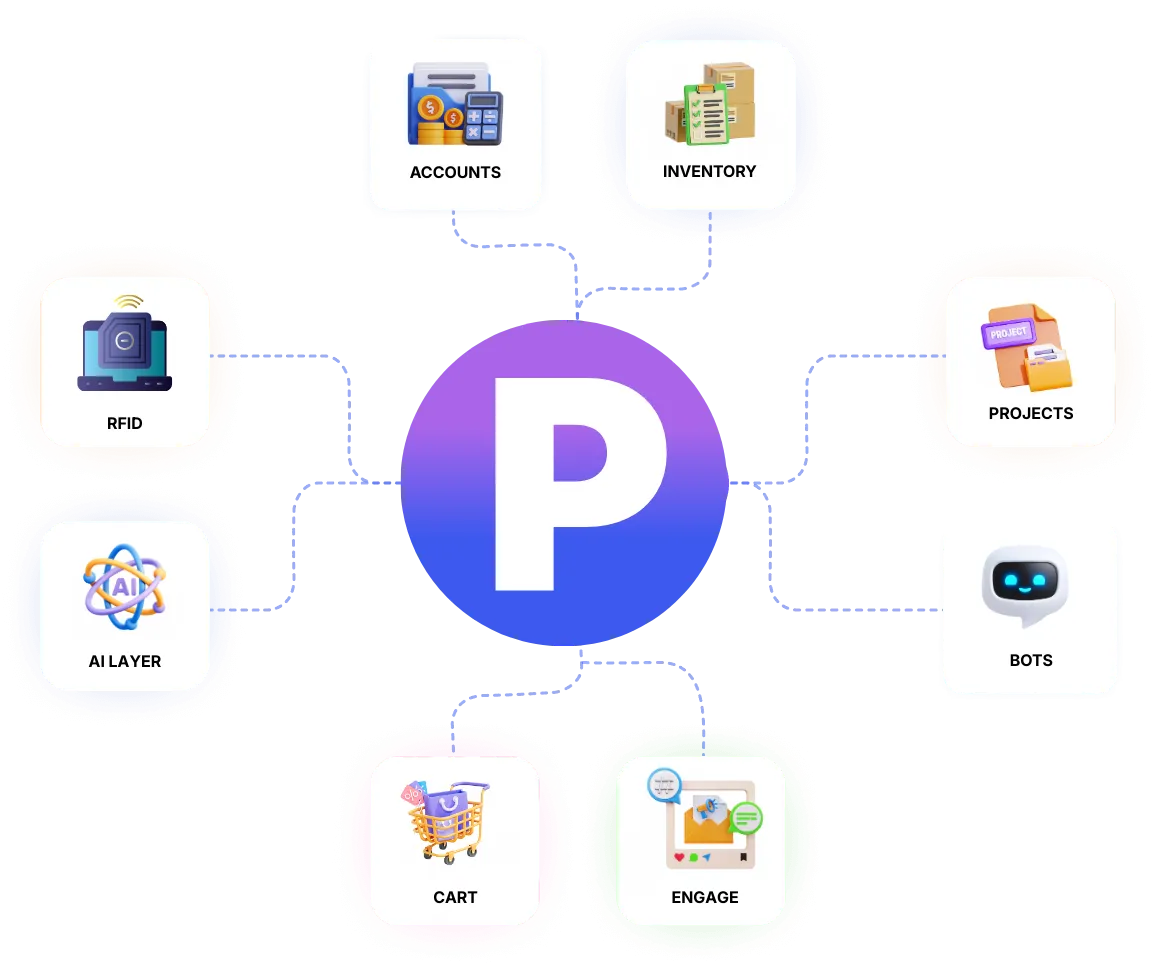
Pixel Reality operates within the Pixel Ecosystem's hub-and-spoke architecture where every immersive experience connects.
All immersive experiences connect to the Pixel Ecosystem data hub for real-time product data, inventory counts, pricing, user.
Each immersive application — AR visualization, VR training, virtual showroom, AR maintenance — is a specialized spoke.
The shared AI intelligence layer powers all immersive spokes with personalization, recommendation, and analytics capabilities..
Most AR/VR vendors build demos that look impressive but deliver no business value. Pixel Reality is different — every immersive.
We do not build AR/VR experiences for novelty. Every Pixel Reality implementation is designed to achieve specific business.
Unlike standalone AR/VR solutions, Pixel Reality connects to your ERP, inventory, CRM, and e-commerce systems through the Pixel.
AI is embedded in every Pixel Reality experience — from AI-powered room scanning and surface detection to personalized product.
Pixel Reality is an AI-powered AR/VR platform for businesses that need immersive product visualization, virtual showrooms, 3D.
Customers point their smartphone or tablet camera at the surface where they want to see your product. AI detects the surface.
AR experiences work on any modern smartphone or tablet — iPhone (ARKit), Android (ARCore), and iPad. No special app required.
Multiple approaches based on product type: (1) AI photogrammetry — multiple product photographs are processed to create detailed.
Virtual showrooms are 3D environments that visitors navigate from their browser or VR headset. Products are displayed on virtual.
Customers customize products in real time — changing colors, materials, sizes, finishes, and features with visual updates in 3D..
You pay only when we deliver measurable results — not upfront, not by the hour. Each implementation phase has clear deliverables.
Depends on scope: AR product visualization for 50-100 products takes 6-8 weeks. Virtual showroom design and build takes 8-10.
Research shows VR training delivers 4x better knowledge retention, 275% more confidence in applying skills, and 3.75x faster.
Yes, for specific use cases. AR product visualization and 3D configurators require an internet connection for real-time product.
Pixel PMC provides AI-measured construction progress data, site photographs, and milestone status. This data feeds into Pixel.
Rich engagement analytics: product visualization frequency, time spent per product, AR sessions to purchase conversion,.
Photorealistic on modern devices. AI handles environment lighting matching — if the room has warm light, the product renders.
Typical ROI varies by use case: AR product visualization delivers 65% higher engagement, 40% faster purchase decisions, and 30%.
Field technicians point their device at equipment. AI identifies the equipment model using visual recognition. The correct.
Yes. For standard catalog additions, upload product photographs through the admin interface. AI photogrammetry generates 3D.
AI personalizes every immersive experience using customer data from Pixel ERP™: purchase history, browsing patterns, price.
Any industry where visualization drives decisions: Natural stone (slab visualization on surfaces), textiles (fabric visualization.
Five reasons: (1) AI-native immersive — not 360-degree photos with hotspots, but genuine AI-powered visualization.
Yes. We offer live demos where you will experience AR product visualization on your phone, walk through a virtual showroom, try.
Join the businesses that have transformed their product showcasing and training with Pixel Reality. From AR.