
Platform Engineering

AI-Powered Platform Engineering for Scalable, Self-Healing Infrastructure

Enterprise platform engineering with AI at the core. Modular Services architecture, real-time systems, API-first design,.

0.99%

Platform Uptime

0ms

Avg API Latency

0+

Years Combined Experience

0%

Referral Growth

0+

Modular Services Deployed

0K+

Concurrent Users Supported
Core Capabilities

AI-Native Platform Engineering Capabilities

Every platform we build is AI-native from the ground up. Not AI as an afterthought, not AI as a premium add-on — AI embedded.

Modular Services Architecture

Decompose monolithic applications into independently deployable modular services with clear domain boundaries, API contracts.

  • Domain-Driven Design for bounded contexts
  • Independent deployment & scaling per service
  • Service mesh with mTLS & traffic management
Real-Time Systems

Build platforms that react in real time using event streaming, CQRS, and event sourcing patterns. Apache Kafka and cloud event.

  • Apache Kafka & cloud event bus streaming
  • CQRS & event sourcing patterns
  • Dead letter queues & event replay
API-First Design

Every platform capability is accessible via well-documented, versioned REST APIs before any UI is built. OpenAPI 3.0.

  • OpenAPI 3.0 contract-first development
  • GraphQL for complex query patterns
  • API gateway with rate limiting & auth
Cloud-Native Computing

Leverage cloud-native compute, scalable cloud database, S3, global CDN, SES, and cloud event bus for zero-server-management.

  • cloud-native compute for compute
  • scalable cloud database for cloud database at scale
  • S3 + global CDN for global delivery
AI Service Mesh

Deploy AI models as first-class platform services with dedicated inference endpoints, model versioning, A/B testing.

  • Model registry with version control
  • A/B testing for model deployments
  • Automated retraining pipelines
Self-Healing Infrastructure

Platforms that detect failures and recover automatically without human intervention. Kubernetes liveness and readiness probes.

  • Kubernetes self-healing with auto-restart
  • AI anomaly detection & predictive alerts
  • Automated runbooks for recovery
Technology Stack

The Technology Stack Behind Every Platform We Build

We are opinionated about our stack because we have spent decades learning what works at scale. Every technology choice is made.

Application Framework

Enterprise Backend Framework

Our primary backend framework for enterprise applications. Elegant syntax, powerful ORM (Eloquent), built-in queue management,.

  • RESTful API development with automatic documentation
  • Queue-based async processing with managed queues
  • Real-time events via WebSockets
Database

Scalable Cloud Database

Scalable Cloud Database for cloud-native, infinitely scalable workloads — session management, real-time data, IoT.

  • scalable cloud database: single-digit ms latency at any scale
  • Relational database: complex queries & ACID transactions
  • Automated backups & point-in-time recovery
Compute

Cloud-Native Compute & Containers

Managed functions for real-time, pay-per-execution compute — API backends, file processing, data transformations, and scheduled jobs..

  • Managed functions: real-time, pay-per-execution
  • ECS/Fargate: managed container orchestration
  • Kubernetes: full orchestration control
Storage & CDN

S3 & global CDN

S3 for virtually unlimited object storage — documents, images, backups, data models, and static assets. Lifecycle policies.

  • S3: unlimited storage with 11 nines durability
  • global CDN: 400+ global edge locations
  • Lifecycle policies & intelligent tiering
Communication

SES & cloud event bus

cloud email service for transactional and marketing email at scale — invoice notifications, order confirmations, campaign emails,.

  • SES: high-deliverability transactional email
  • managed event bus
  • Rule-based routing & filtering
Frontend & Mobile

cross-platform mobile framework & Vue.js

cross-platform mobile framework for cross-platform mobile apps — single codebase for iOS and Android with native performance..

  • cross-platform mobile framework: native iOS & Android from one codebase
  • Vue.js: reactive web frontends
  • Inertia.js: SPA without API complexity
AI Intelligence Layer

How AI Powers Platform Operations

AI is not a feature we add to platforms — it is the platform. Every operational decision, from scaling to monitoring to cost.

AI-Powered Auto-Scaling

Traditional auto-scaling reacts to thresholds — CPU hits 80%, add instances. Our AI auto-scaling predicts demand before it.

Intelligent Monitoring & Alerting

Beyond threshold-based alerts. Our AI monitoring layer learns your platform's normal behavior — response time patterns, error.

Anomaly Detection & Root Cause Analysis

When something goes wrong, AI traces the root cause across distributed services in seconds — correlating logs, metrics, traces,.

AI Cost Optimization

Cloud costs are the silent killer of platform economics. Our AI cost optimization engine continuously analyzes resource.

Platform Comparison

Monolithic vs Modular Services vs AI-Native Platform

Most companies are choosing between monolith and modular services. At Pixel Tech™, we build AI-native platforms that go beyond both —.

Dimension Monolithic Modular Services AI-Native Platform (Pixel)
ScalingScale entire app for one bottleneckScale individual servicesAI predicts & pre-scales before demand hits
DeploymentFull redeploy for any changeIndependent service deploysAI-gated canary deploys with auto-rollback
Fault ToleranceSingle point of failureService-level isolationSelf-healing with AI root cause analysis
MonitoringBasic health checksService-level metricsAI anomaly detection with contextual alerts
Cost ManagementFixed infrastructure costPer-service optimizationAI-driven cost optimization — 30-50% savings
Data FlowShared database, tight couplingAPI calls, eventual consistencyReal-time with AI-powered data enrichment
SecurityPerimeter-only defenseService-level authZero-trust + AI threat detection
TestingFull regression for every changeContract testing per serviceAI-powered test generation & chaos engineering
OperationsManual ops, runbooksCI/CD, GitOpsAI ops — automated remediation & optimization
EvolutionBig-bang rewritesIncremental service updatesAI identifies technical debt & suggests refactors
Developer ExperienceLengthy setup, complex environmentsContainer-based dev environmentsAI-assisted development with auto-generated scaffolding
Incident ResponseManual triage, hours to resolvePagerDuty alerts, runbooksAI auto-detects, classifies, and remediates in minutes
Capacity PlanningOver-provision for safetyManual scaling rulesAI predictive scaling based on traffic patterns
Compliance & AuditManual documentationInfrastructure-as-code auditingAI-generated compliance reports with drift detection
Cost ManagementFixed infrastructure costsPay-per-resource with wasteAI FinOps with continuous cost optimization
Platform MaturityLevel 1 — ad hocLevel 3 — standardizedLevel 5 — self-optimizing with AI autonomy
Architecture Patterns

Battle-Tested Architecture Patterns We Deploy

These are not theoretical patterns from textbooks. These are architectures we have deployed in production, serving real.

Core Pattern

Hub-and-Spoke Architecture

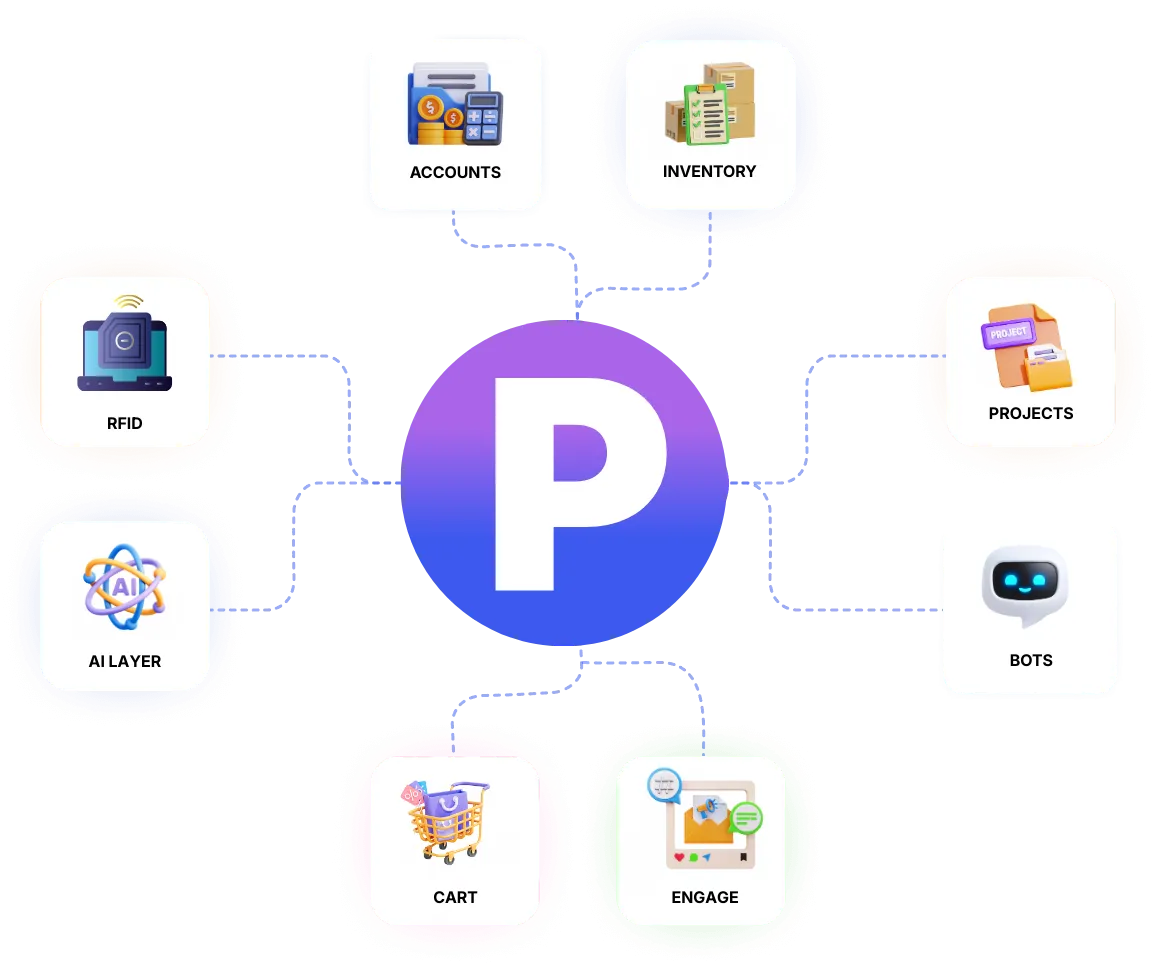
The signature Pixel Tech™ architecture pattern. The hub provides shared services — AI engine, authentication, API gateway, event.

  • Shared AI engine across all modules
  • SSO & unified authentication
  • Real-time inter-module communication
Scale Pattern

Multi-Tenant Architecture

A single platform instance serves multiple tenants (clients, business units, regions) with complete data isolation,.

  • Complete data isolation per tenant
  • Tenant-specific configurations & branding
  • Shared infrastructure for cost efficiency
Implementation Process

Our Platform Engineering Delivery Process

Every platform engagement follows our battle-tested 6-phase process. Milestone-based billing means you pay when deliverables are.

Platform Discovery

Deep technical assessment of your current state — existing systems, data flows, integration points, performance bottlenecks.

Phase 1
Phase 2
Foundation Build

Infrastructure provisioning, CI/CD pipeline setup, monitoring stack deployment, security hardening, and core platform services.

Service Development

Iterative development of platform services in 2-week sprints. Each sprint delivers working, tested, documented services.

Phase 3
Phase 4
Integration & Testing

End-to-end integration testing, performance testing under production-like load, security penetration testing, disaster recovery.

Production & Optimization

Production deployment with canary rollout, real-time monitoring, and immediate rollback capability. Post-launch optimization — AI.

Phase 5
Why Pixel Tech™

Why Build Your Platform with Pixel Tech™

AI-First, Not AI-Later

Every platform we build has AI embedded from the architecture level. Auto-scaling, monitoring, cost optimization, security.

Pay on Milestones Met

Bi-weekly milestones with clear deliverables. You see working platform components every 2 weeks. You pay only when milestones are.

Founder-Led Delivery

Every platform project is personally architected by Aman Jain (CEO, 25+ years at Bank of America, Merrill Lynch, Fidelity).

Referral Growth

Every client has come from referrals. Zero paid marketing. Zero sales team. When your platform succeeds, you tell your network..

Battle-Tested Patterns

Our hub-and-spoke architecture, configurable platform, and multi-tenant design are not theoretical. They power the Pixel.

Your Infrastructure, Your Data

We deploy on your cloud account. You own the infrastructure. You control the data. We provide source code access, operational.

Founder-Led Platform Engineering

Enterprise Architects
Who Build Your Platform

Every platform engineering engagement at Pixel Tech™ is personally architected and overseen by our founders. The people.

Aman Jain — CEO & Chief Architect

25+ years building enterprise platforms at Bank of America, Merrill Lynch, and Fidelity. Personally designed systems processing.

Garima Jain — CTO

16+ years at Accenture delivering large-scale platform transformations for Fortune 500 clients across banking, insurance,.
Pixel Tech™ Founders — Aman Jain & Garima Jain — Enterprise Platform Architects
Security

Enterprise-Grade Platform Security

Every Pixel platform is engineered with security as a foundational pillar, not an afterthought. Aman Jain's 25+ years building.

Zero-Trust Network Architecture

Every service-to-service communication is authenticated and encrypted. No implicit trust between services, regardless of network.

AI-Enhanced Threat Detection

AI security models analyze platform behavior patterns to detect anomalies in real-time. Unusual API access patterns, abnormal.

Encryption & Data Governance

AES-256 encryption at rest for all data stores. TLS 1.3 for all data in transit. Field-level encryption for sensitive data.

FAQ

Platform Engineering FAQ

DevOps focuses on CI/CD pipelines, automation, and bridging dev-ops gaps. Platform engineering goes further — it creates an Internal Developer Platform (IDP) with self-service infrastructure, standardized tooling, and golden paths that developers use to build, deploy, and operate services. We build the platform that your development teams build upon. Think of DevOps as practices; platform engineering as the product that implements those practices.

It depends on scope. A greenfield modular services platform: 4-8 months. Monolith-to-modular services migration: 6-12 months. Cloud infrastructure modernization: 2-4 months. AI integration into existing platforms: 3-6 months. We follow milestone-based delivery with working deliverables every 2 weeks, so you see progress immediately. The phased approach means you get production value early, not only at the end.

Yes. We use the Strangler Fig pattern — gradually replacing monolith components with modular services while the monolith continues running. API facades route traffic to new services as they are ready. Database decomposition happens in parallel using Change Data Capture (CDC). There is no big-bang switchover. The monolith shrinks organically as modular services prove themselves in production. Zero downtime throughout the migration.

Every engagement is divided into 2-week milestones with clearly defined deliverables. At the end of each milestone, we demonstrate the completed work. You verify it meets requirements. You pay only after verification. If a deliverable does not meet your expectations, we fix it before payment. No large upfront deposits. No hourly billing that incentivizes slow delivery. Our revenue depends on your satisfaction — that is the alignment you want from a technology partner.

The AI layer runs as a set of platform services. Auto-scaling AI analyzes historical traffic patterns and pre-scales infrastructure. Monitoring AI learns normal behavior baselines and alerts on anomalies. Cost optimization AI identifies underutilized resources and recommends right-sizing. Security AI detects unusual access patterns. All models are trained on your platform data and improve over time. You can think of it as an intelligent operations team that never sleeps.

Yes. While we recommend AWS as the primary cloud for most workloads (best price-performance for our stack), we deploy on Azure and GCP as well. Multi-cloud strategies for disaster recovery and vendor diversification are supported. Hybrid deployments with on-premise components are common for healthcare and financial services clients with data residency requirements. Kubernetes provides the abstraction layer that makes cloud portability practical.

Business benefit: you build once, reuse forever. The hub provides AI, authentication, notifications, search, and file storage that every new module inherits automatically. When you add a new product line, you do not rebuild these capabilities. You plug a new spoke into the hub. This reduces new module development time by 40-60% compared to building standalone applications. It also eliminates data silos — all modules share a unified data layer.

Defense-in-depth: network isolation (VPC, private subnets, WAF), identity management (OAuth 2.0, SSO, MFA, RBAC), data protection (AES-256 encryption at rest, TLS 1.3 in transit, mTLS between services), application security (SAST/DAST in CI/CD, dependency scanning, container scanning), and AI-powered threat detection for runtime protection. Regular penetration testing, compliance audits, and incident response procedures. Security is architectural, not an afterthought.

Yes. API-first design means every platform capability has well-documented REST APIs. We build integration adapters for existing systems — legacy ERPs, third-party SaaS tools, partner APIs, and internal databases. Real-time architecture enables real-time data flow between the new platform and existing systems. We commonly integrate with SAP, Oracle, Salesforce, QuickBooks, Shopify, WooCommerce, and custom systems of all kinds.

We offer three post-launch options. (1) Managed Services: We operate and optimize the platform 24/7 — monitoring, patching, scaling, AI model retraining, and continuous improvement. (2) Transition: We transfer full operational knowledge to your team through documentation, training, and a 90-day supported transition. (3) Hybrid: Your team handles day-to-day operations; we handle architecture decisions, major upgrades, and AI optimization. Most clients choose managed services initially and transition to hybrid as their team matures.

An in-house platform team of equivalent capability (senior architect, DevOps engineers, AI engineers, security specialist) costs $800K-$1.5M annually in salaries alone, plus 6-12 months to hire. We deliver production-ready platforms for a fraction of that cost, with immediate availability and 25+ years of combined enterprise experience. You also get our battle-tested patterns, reusable infrastructure modules, and AI models instead of building from scratch.

Terraform for cloud infrastructure provisioning — networks, databases, cloud functions, and object storage, IAM policies. Kubernetes manifests (Helm charts) for application deployment. GitHub Actions or GitLab CI for CI/CD pipelines. ArgoCD for GitOps-based continuous deployment. All infrastructure is version-controlled, code-reviewed, and automatically tested. No manual console clicks. Every change is auditable and reproducible.

Each microservice owns its database schema and manages migrations independently using tools like Flyway or enterprise backend framework migrations. Backward-compatible schema changes (add columns, not modify) enable zero-downtime deployments. For data decomposition during monolith migration, we use Change Data Capture (CDC) to keep source and target databases synchronized during the transition period. Real-time data synchronization handles cross-service data needs.

A configurable platform separates business logic from code. Workflows, approval hierarchies, notification templates, pricing rules, tax calculations, and report layouts are all defined in configuration — not hard-coded. This means business users can modify behavior without developer involvement or code deployments. New features can be activated with a configuration change, not a development sprint. The Pixel Ecosystem uses configurable architecture to serve 10+ industries from a single codebase.

Three pillars of observability: Metrics (Prometheus + Grafana for dashboards and alerting), Logs (ELK Stack or CloudWatch for centralized log aggregation and search), and Traces (Jaeger or AWS X-Ray for distributed request tracing across modular services). AI anomaly detection sits on top for intelligent alerting. Synthetic monitoring simulates user flows to catch issues proactively. All integrated into a single glass-pane view.

Performance is designed in, not bolted on. Database optimization (indexing, connection pooling, read replicas, caching), API response caching (in-memory cache, global CDN), asynchronous processing for non-critical paths (queues, real-time), and CDN for static asset delivery. Load testing under production-like conditions before every release. AI auto-scaling ensures infrastructure matches demand. Our standard benchmarks: p50 API response under 50ms, p99 under 200ms.

No. Kubernetes is excellent for complex, long-running services that need orchestration, but it is overkill for many workloads. Cloud-native compute is better for real-time, sporadic workloads. ECS/Fargate handles container workloads without Kubernetes complexity. We choose the right compute model for each workload: Lambda for event processing, Fargate for simple containers, Kubernetes for complex orchestration. Pragmatic choices, not ideological ones.

Polyglot persistence: each service uses the optimal database for its workload. a scalable cloud database for high-throughput workloads, a managed relational database for transactional data, in-memory caching for real-time data, and a search engine for search and analytics. S3 for object storage. Event sourcing provides a complete audit trail and enables state reconstruction. A shared data catalog with schema governance ensures consistency across the platform while maintaining service autonomy.

Multi-level testing strategy: unit tests (80%+ coverage per service), integration tests (API contract testing using Pact), end-to-end tests (critical user flow automation), performance tests (load testing with k6 before every release), security tests (SAST/DAST in CI/CD pipeline, periodic pen testing), and chaos engineering (intentional failure injection in staging). AI-assisted test generation identifies edge cases that manual test planning misses. Tests run automatically on every commit.

Book an architecture review with our founders. We will assess your current state, discuss your goals, and provide a preliminary recommendation — technology stack, architecture pattern, timeline, and phased plan. This initial consultation is free. If we are a good fit, we start with a paid Discovery phase (2-4 weeks) that produces a detailed Architecture Decision Record. Every engagement is milestone-billed, founder-led, and focused on production outcomes, not PowerPoint decks.
All Services

Explore our full service portfolio — ERP, AI, cloud, integration, and managed services.

AI & Automation

Production-ready AI for process automation, predictive analytics, and computer vision.

Cloud Infrastructure

AWS, Azure, GCP — designed, deployed, and managed with infrastructure as code.

System Integration

Connect disparate systems into a unified data ecosystem with APIs and events.

Architecture Deep Dive

Technical architecture of the Pixel Ecosystem — hub-and-spoke, AI engine, security.

Pixel Ecosystem

15+ integrated AI-powered products built on platform engineering principles.

Case Studies

Real platform engineering results across manufacturing, distribution, and more.

Book a Demo

Free architecture review with our founders. No sales pitch, just technical depth.

Ready to Build an AI-Native Platform?

Book a free architecture review with CEO Aman Jain. 25+ years of enterprise platform engineering at Bank of America, Merrill.